
The new methodology for measuring multidimensional poverty – presented by the NBS at an event attended by central public authorities

The National Bureau of Statistics (NBS), in cooperation with the Oxford Poverty and Human Development Initiative (OPHI) and with the support of the United Nations Development Programme (UNDP), developed the draft methodology for calculating the Multidimensional Poverty Index (MPI), based on the Alkire-Foster methodology applied worldwide and taking into account the national context.
The new methodology for estimating the MPI, as well as the main results of the experimental MPI calculations, were presented during a workshop organised by the NBS on 3 June 2022, with the participation of foreign experts who contributed to its development and representatives of the State Chancellery and the Ministries of Economy, Finance, Infrastructure and Regional Development, Labour and Social Protection, Health, and Education and Research.
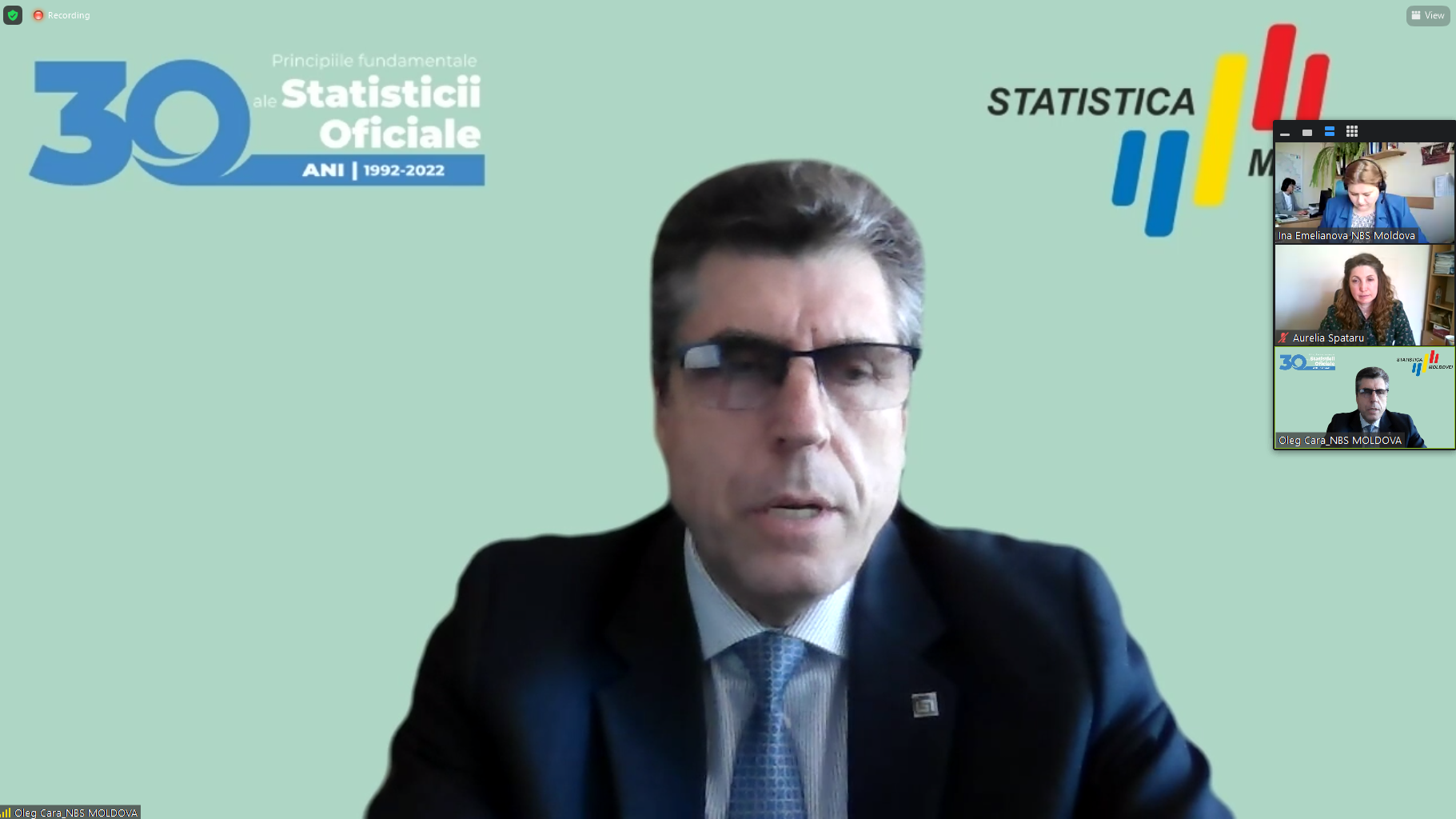
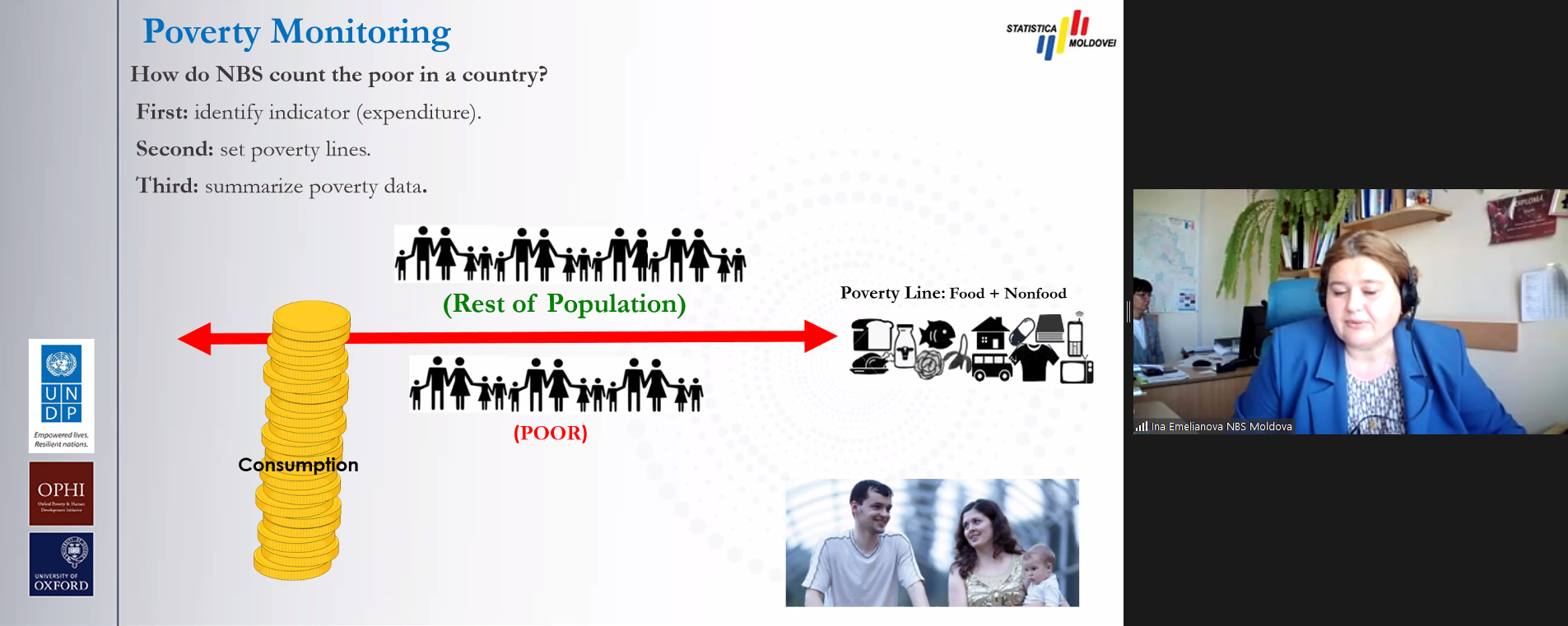
At the opening of the event, Oleg Cara, Director General of the NBS, noted that, at present, poverty indicators in the Republic of Moldova are estimated on the basis of monetary indicators, depending on the consumption expenditure of the population. However, non-monetary indicators covering the dimensions of education, health, employment and living conditions can provide additional information on the specific problems faced by the country’s poor population. “The poverty dimensions proposed for the structure of the MPI were identified through an extensive consultation process involving the population — including representatives of vulnerable groups — and policymakers, taking into account the priorities of current national policies, as well as the availability of data sources for the quantitative measurement of the MPI components”, mentioned Oleg Cara, thanking the development partners for all the support provided.
Dima Al Khatib, Resident Representative of UNDP Moldova, stated in a video message addressed to the participants that, in order to implement the global development agenda, particularly with regard to the production of statistical indicators for monitoring the Sustainable Development Goals (SDGs), it is necessary to produce and disseminate data for monitoring Target 1.2, which calls for reducing by at least half, by 2030, the proportion of men, women and children of all ages living in poverty in all its dimensions according to national definitions.
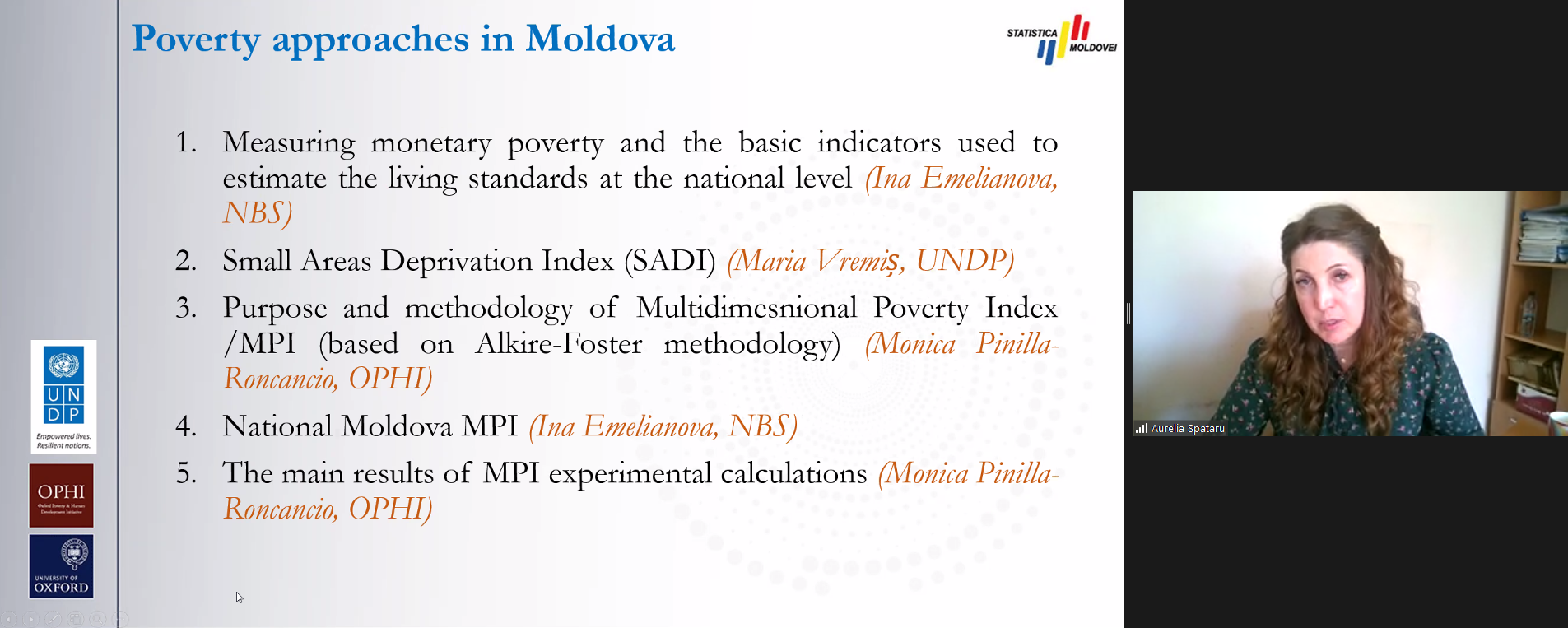
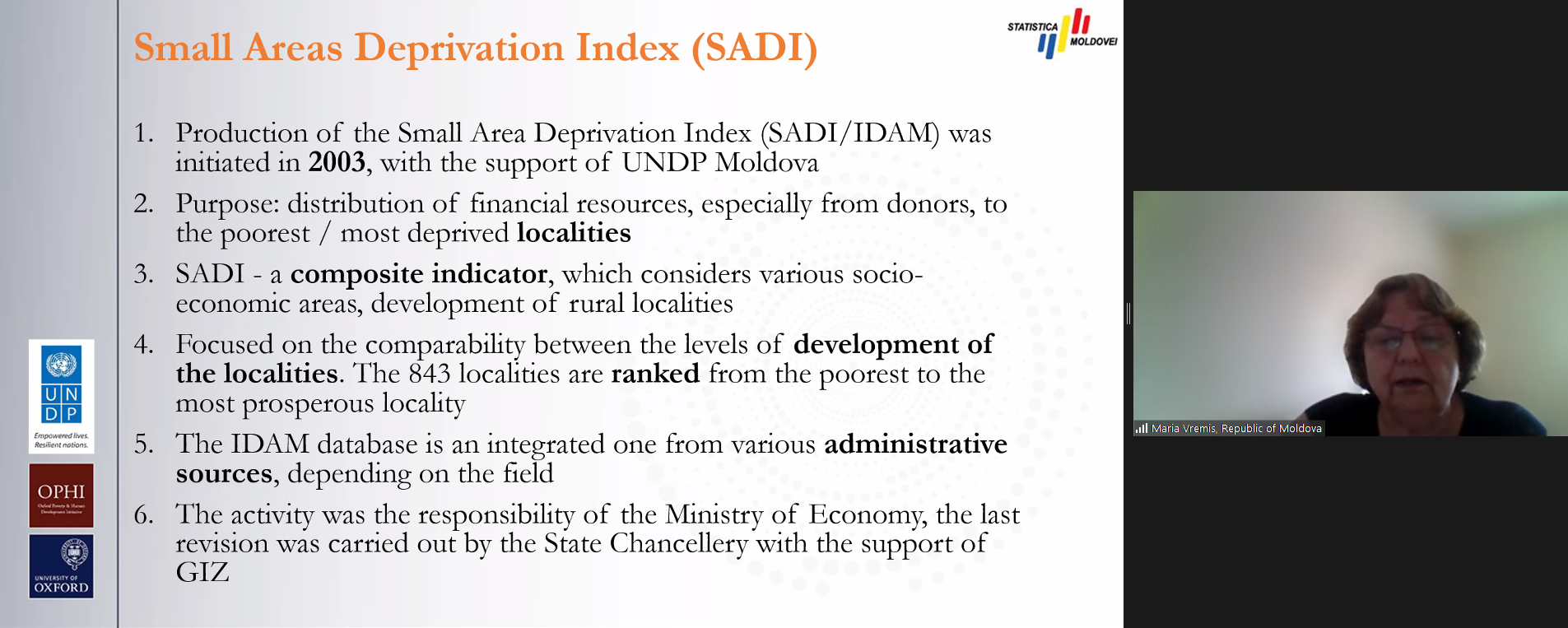
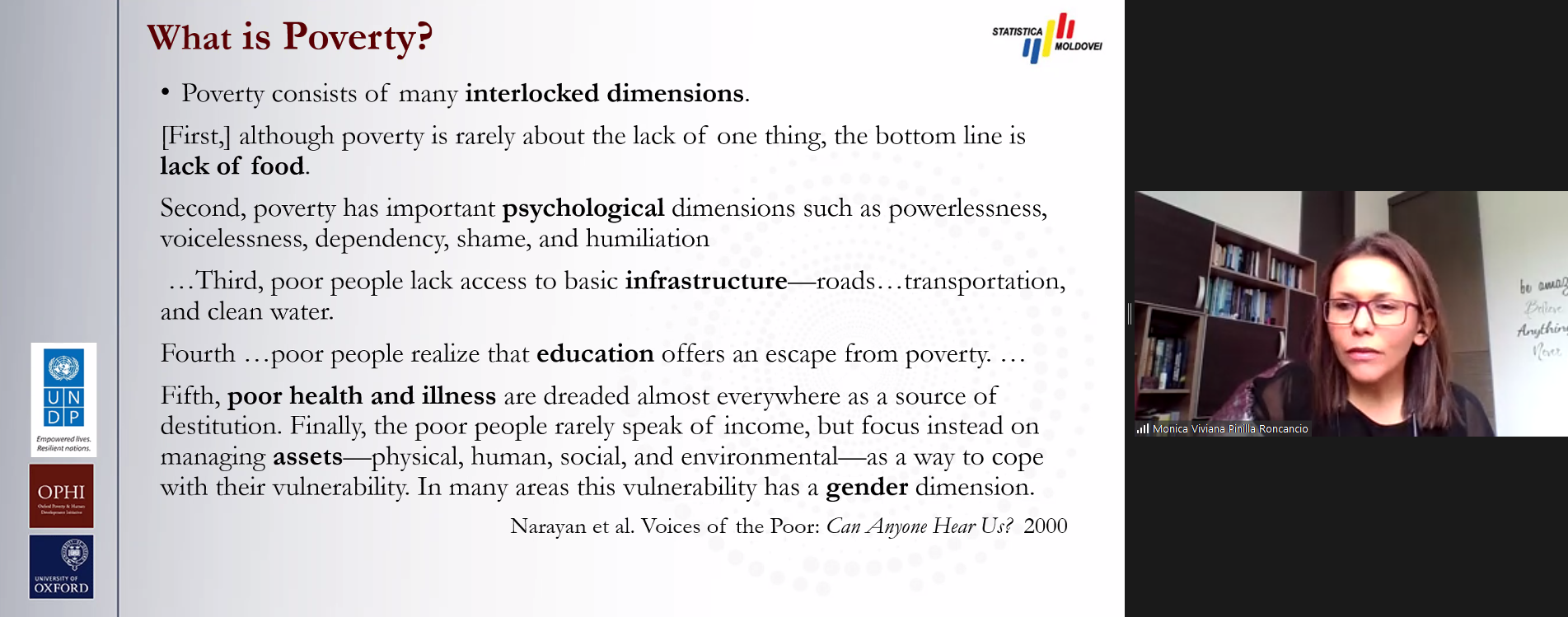
During the workshop, Ina Emelianova, Head of the Living Standards Statistics Division of the NBS, together with Monica Pinilla-Roncancio, Director of Outreach at OPHI, and Maria Vremiș, UNDP consultant, presented information on the purpose and methodology for calculating the MPI, as well as the differences between the monetary and multidimensional approaches. They also presented the four dimensions of non-monetary poverty relevant to the context of the Republic of Moldova and a list of 11 statistical indicators used to measure non-monetary deprivation and the dimensions of poverty.
The Global Multidimensional Poverty Index is an international measure of multidimensional poverty, calculated for more than 100 countries, which reflects the multiple deprivations experienced by poor people in the areas of health, education and living standards, and measures both the incidence and the intensity of multidimensional poverty.
To adapt the MPI to the national context, the Alkire-Foster method was used — a methodology developed and applied by the Oxford Poverty and Human Development Initiative (OPHI) to measure multiple dimensions of poverty. It provides the NBS with a robust tool for measuring non-monetary poverty and the deprivations faced by the country’s population. At present, this is the most widely used method for calculating the MPI, as it identifies people who experience multiple deprivations simultaneously.
Since the MPI requires a complete deprivation profile for each unit — whether an individual or a household — information for all indicators must be available for each person and must come from the same data source. All data used for the national MPI come from the Household Budget Survey (HBS). Firstly, the HBS is a continuous household statistical survey through which a range of socio-economic indicators and indicators related to the population’s standard of living are regularly collected. Secondly, since monetary poverty is also calculated on the basis of the HBS, the use of the same data source allows comparisons between monetary and non-monetary poverty rates, providing useful information for describing the nature of poverty in the country.
During the discussion session, national partners provided comments on the prospects for using the MPI in public policies to monitor the living standards and well-being of the population of the Republic of Moldova.
It should be noted that the development of the MPI will help provide data for monitoring progress in the implementation of the SDGs, particularly Target 1.2.
The national MPI for Moldova was designed primarily for two reasons. First, it aims to provide up-to-date statistics on multidimensional poverty in order to inform policymaking and implementation. A national MPI can guide coordinated policy action across several ministries, provide clear objectives and targets for each indicator, and serve as a monitoring and accountability tool.
Second, it aims to complement the monetary poverty statistics published by the NBS by providing a better understanding of the multidimensional nature of poverty and the deprivations faced by different groups of the population of the Republic of Moldova.



- Report a mistake. Select the desired text and press CTRL + ENTER